

Description
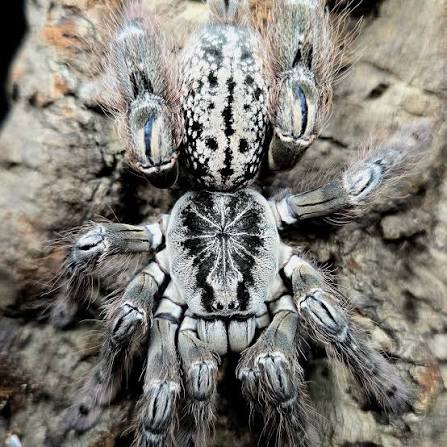
Grey Starburst Baboon Tarantula (Pterinochilus murinus)
The Grey Starburst Baboon Tarantula is a spectacular Old World tarantula, admired for its striking grey and silver colouration, distinctive starburst markings across the carapace and impressive web-building behaviour.
Originating from Africa, this grey colour form of Pterinochilus murinus displays beautiful contrasting patterns across its body and legs, offering a stunning alternative to the better-known Orange Baboon Tarantula (OBT).
Known for its incredible speed, strong feeding response and defensive temperament, the Grey Starburst Baboon Tarantula is a fascinating species best suited to experienced tarantula keepers.
Habitat
Grey Starburst Baboon Tarantulas are primarily terrestrial but are highly adaptable, constructing extensive silken retreats and elaborate web tunnels.
-
Enclosure: A secure, well-ventilated terrestrial enclosure with opportunities for burrowing and web construction
-
Temperature: Approximately 24–28°C
-
Humidity: Low to moderate, generally around 40–60%, with access to fresh drinking water
-
Moisture: Avoid excessively damp or stagnant conditions
-
Decor: Cork bark, sheltered retreats and suitable anchor points for webbing
-
Lighting: A consistent day/night cycle, with no specialist UVB lighting required
-
Water: A shallow dish of fresh water should always be available
This species is a particularly enthusiastic web builder and will often transform much of its enclosure into an impressive network of silk tunnels and retreats.
Feeding
Grey Starburst Baboon Tarantulas are carnivorous predators with a particularly strong feeding response.
-
Diet: Crickets, locusts, roaches, mealworms and other appropriately sized feeder insects
-
Spiderlings and Juveniles: Generally fed 2–3 times per week, depending on size and body condition
-
Adults: Usually fed approximately once a week, adjusted according to appetite and body condition
-
Feeding Behaviour: Fast and powerful predators capable of striking rapidly at passing prey
-
Water: Fresh drinking water should always be available
-
Maintenance: Uneaten prey should be removed, particularly when the tarantula is preparing to moult
General Care
As an Old World tarantula, the Grey Starburst Baboon Tarantula requires careful management and is recommended for experienced keepers.
-
Temperament: Extremely fast, alert and potentially highly defensive
-
Handling: Not recommended under any circumstances
-
Venom: Possesses potent venom capable of causing significant pain, muscle cramps and other medically significant symptoms
-
Defence: Does not possess urticating hairs and may rely on speed, threat displays and biting when threatened
-
Adult Leg Span: Approximately 12–15cm
-
Growth Rate: Relatively fast-growing
-
Lifespan: Females can live approximately 10–15 years, with males having considerably shorter lifespans
-
Housing: Must be housed individually
-
Activity: Prolific web builder with fascinating hunting and retreat-building behaviour
A secure enclosure and careful maintenance procedures are essential due to this species' speed and defensive nature.
Why Choose a Grey Starburst Baboon Tarantula?
-
Stunning grey and silver colouration
-
Distinctive starburst carapace markings
-
Incredible web-building behaviour
-
Powerful feeding response
-
Relatively fast growth rate
-
Fascinating natural hunting behaviours
-
Beautiful alternative to the Orange Baboon Tarantula
-
Excellent display species for experienced tarantula enthusiasts
With its striking silver-grey appearance, intricate starburst markings and extraordinary web-building abilities, the Grey Starburst Baboon Tarantula is a spectacular Old World species that makes an impressive addition to any experienced tarantula keeper's collection.
Payment & Security
Your payment information is processed securely. We do not store credit card details nor have access to your credit card information.