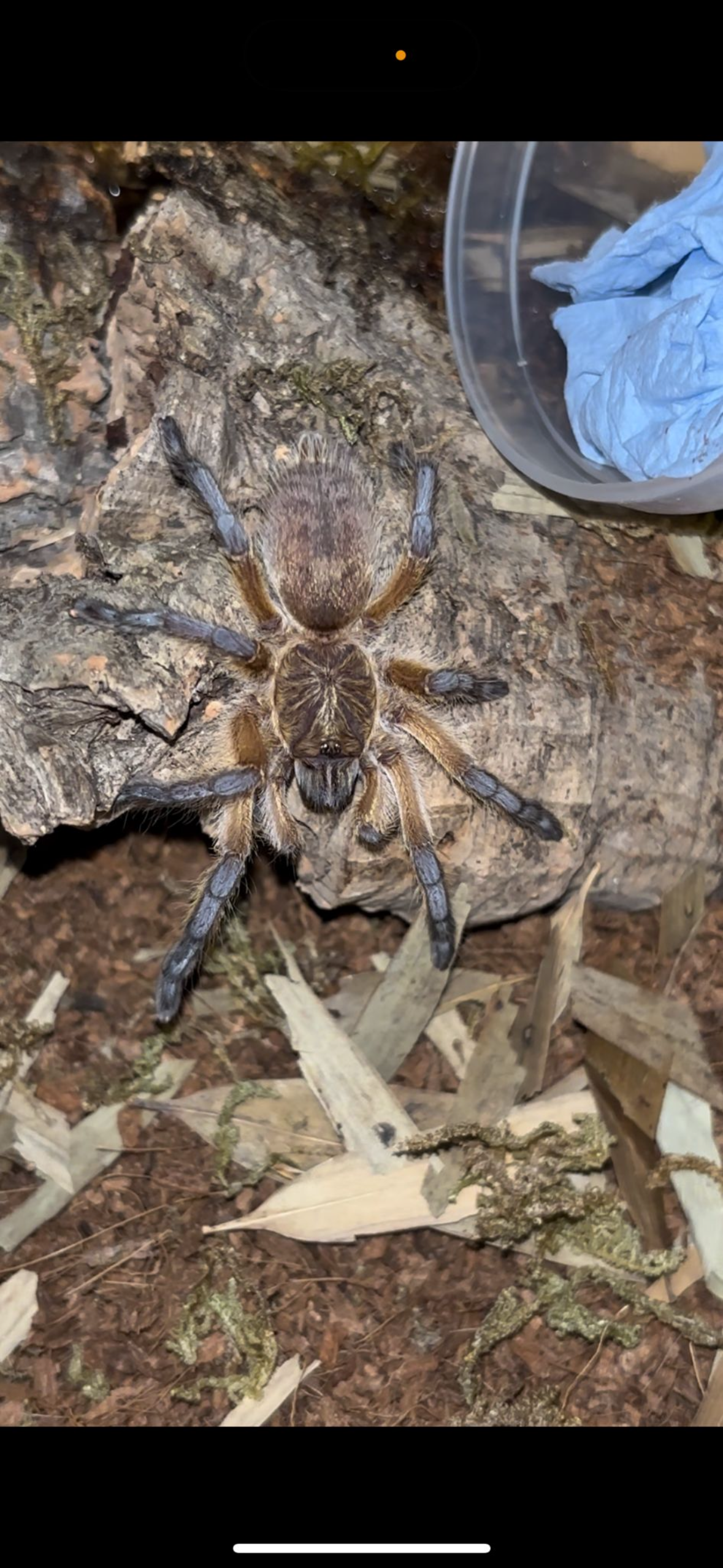
Golden Blue Leg Baboon Tarantula (Harpactira pulchripes)
The Golden Blue Leg Baboon is one of the most visually stunning tarantulas in the hobby, prized for its metallic blue legs contrasted against a warm golden carapace. Native to Africa, this Old World species is fast, defensive, and best suited to experienced keepers—but offers incredible display value for those prepared to meet its needs.
Habitat
Found in dry scrublands and grasslands of Southern Africa, Harpactira pulchripes is a fossorial species that spends much of its time in burrows.
-
Enclosure: Terrestrial setup with plenty of depth for burrowing
-
Substrate: Deep (10–20cm+) dry substrate such as coco fibre or soil mix
-
Temperature: 24–28°C
-
Humidity: Low to moderate (50–60%)
-
Decor: Cork bark and starter burrow recommended
Feeding
A fast and aggressive feeder, this species has a strong feeding response and readily takes live prey.
-
Diet: Crickets, roaches, locusts, and other insects
-
Feeding frequency:
- Juveniles: 2–3 times per week
- Adults: 1–2 times per week
- Remove uneaten prey to avoid stress
General Care
As an Old World tarantula, this species demands respect and careful husbandry.
-
Temperament: Very fast, defensive, and prone to threat displays
-
Handling: Not recommended under any circumstances
-
Venom: Potent (typical of Old World species)
-
Lifespan:
- Females: 12–15 years
- Males: 3–5 years
-
Maintenance: Keep dry with good ventilation; avoid excessive moisture
Why Choose a Golden Blue Leg Baboon?
- Stunning metallic blue legs with golden body contrast
- Hardy and relatively easy to maintain for experienced keepers
- Fascinating burrowing behaviour
- Striking display species
For seasoned hobbyists looking for a bold, beautiful, and high-energy tarantula, the Golden Blue Leg Baboon is an exceptional addition to any advanced collection.