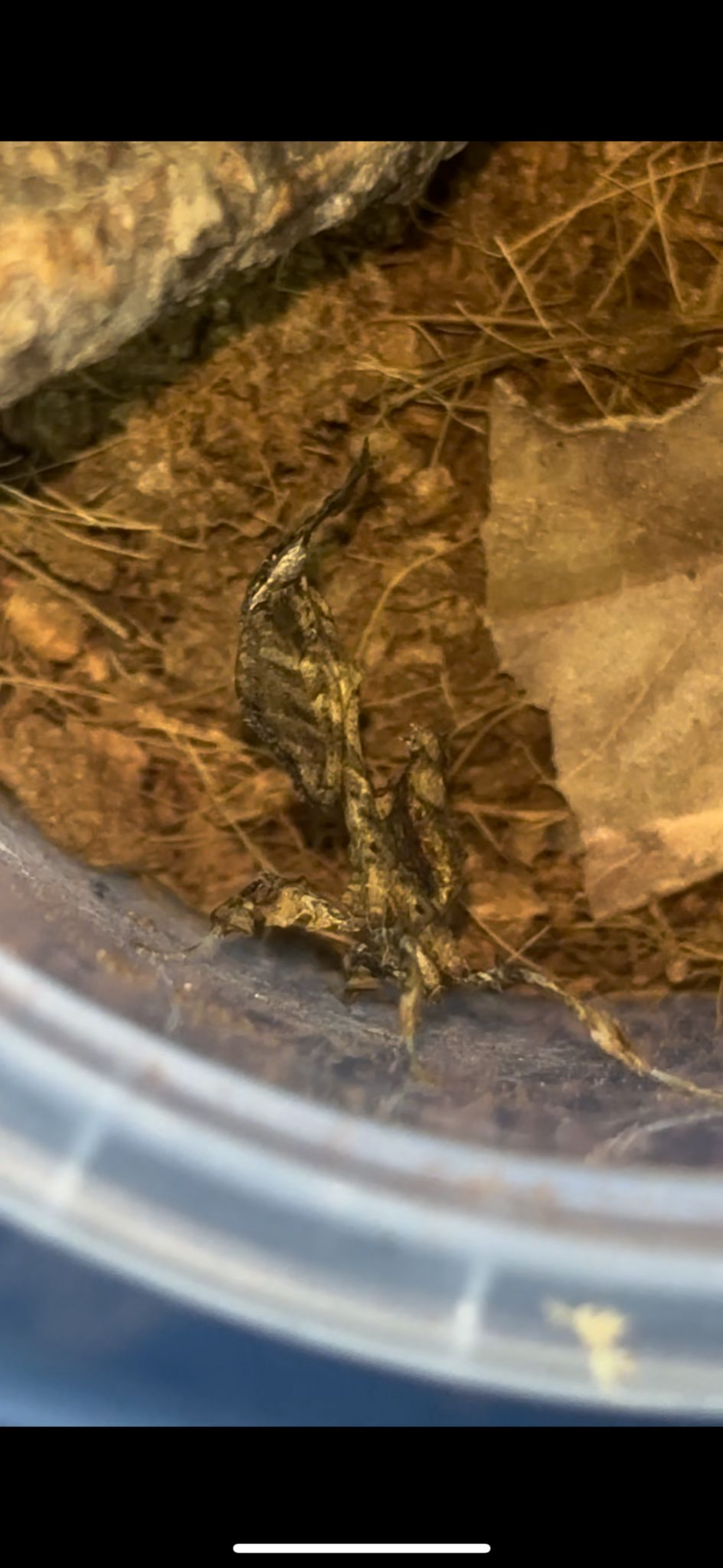
Ghost Mantis (Phyllocrania paradoxa)
The Ghost Mantis is one of the most unusual and captivating mantis species in the hobby, famous for its leaf-like appearance and incredible camouflage. With its twisted body shape, muted brown colouring, and dead-leaf mimicry, this species is both fascinating and beautiful to observe. Calm, lightweight, and relatively easy to care for, the Ghost Mantis is a fantastic choice for both beginners and experienced keepers.
Habitat
Native to Africa and Madagascar, Ghost Mantises thrive in warm, well-ventilated environments with plenty of vertical climbing space for moulting.
-
Enclosure: Tall, well-ventilated enclosure with good height for climbing
-
Temperature: 22–28°C
-
Humidity: Moderate (50–70%) with light misting
-
Decor: Twigs, branches, and foliage for climbing and camouflage
Feeding
Ghost Mantises are ambush predators that patiently wait for prey to come within striking distance.
-
Diet: Fruit flies (for younger nymphs), small crickets, green bottle flies, roaches, and other suitable live insects
-
Feeding frequency:
- Nymphs: Every 1–2 days
- Adults: 2–3 times per week
- Avoid leaving large prey items in the enclosure during moulting periods
General Care
This species is hardy, fascinating to watch, and often more tolerant of communal setups than many other mantis species.
-
Temperament: Calm, slow-moving, and non-aggressive
-
Handling: Possible with care, but best kept as a display species
-
Lifespan: Around 8–12 months depending on sex and care
-
Maintenance: Ensure good airflow and enough vertical space for safe moulting
Why Choose a Ghost Mantis?
- Incredible dead-leaf camouflage and unique appearance
- Beginner-friendly and relatively easy to maintain
- Calm and fascinating behaviour
- Excellent display species for naturalistic setups
A truly eye-catching invertebrate, the Ghost Mantis is perfect for anyone looking for a strange, beautiful, and low-maintenance exotic pet.