

Description
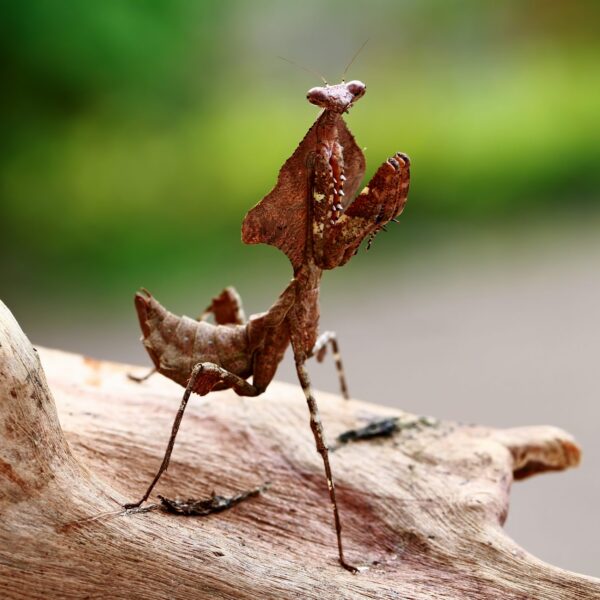
Dead Leaf Mantis (Deroplatys sp.)
The Dead Leaf Mantis is a fascinating and unusual species of praying mantis, famous for its incredible camouflage and remarkable resemblance to a dried, fallen leaf. With its flattened body, leaf-like wings and beautiful shades of brown, this extraordinary insect is a true master of disguise.
Native to the tropical forests of Southeast Asia, Dead Leaf Mantises are ambush predators that rely on their incredible camouflage to remain hidden from both predators and prey. Their unusual appearance, fascinating hunting behaviour and relatively manageable care requirements make them a fantastic addition to any invertebrate collection.
Habitat
Dead Leaf Mantises are primarily arboreal insects that require a warm, humid environment with plenty of opportunities to climb and hang securely when moulting.
-
Enclosure: A secure, well-ventilated enclosure with sufficient vertical height for climbing and moulting
-
Temperature: Approximately 24–28°C
-
Humidity: Generally around 60–80%, depending on the exact species
-
Lighting: A consistent day/night cycle should be provided, with normal ambient lighting generally sufficient
-
Decor: Branches, twigs, artificial or live plants and suitable climbing structures
-
Ventilation: Good airflow is essential to prevent stagnant conditions and excessive moisture
-
Water: Light misting provides drinking droplets and helps maintain appropriate humidity
The enclosure should provide at least three times the mantis's body length in vertical space to allow safe and successful moulting.
Feeding
Dead Leaf Mantises are carnivorous ambush predators that feed on a variety of live insects.
-
Diet: Flies, crickets, locusts, roaches and other appropriately sized feeder insects
-
Young Nymphs: Small fruit flies and other suitable tiny live insects
-
Juveniles: Generally fed every 1–2 days, depending on size and appetite
-
Adults: Usually fed approximately 2–3 times per week
-
Feeding Behaviour: Remain motionless before striking rapidly at passing prey with their powerful front legs
-
Water: Drinking droplets should be made available through appropriate light misting
Uneaten feeder insects should be removed, particularly when the mantis is preparing to moult.
General Care
Dead Leaf Mantises are best appreciated as fascinating display insects rather than regularly handled pets.
-
Temperament: Generally calm when undisturbed but capable of defensive displays
-
Handling: Gentle handling may be possible, although unnecessary handling should be avoided
-
Adult Size: Approximately 6–10cm, depending on species and sex
-
Lifespan: Commonly around 8–12 months, although this varies between species and sexes
-
Activity: Primarily sit-and-wait predators that rely on camouflage rather than constant movement
-
Housing: Best housed individually due to the risk of cannibalism
-
Moulting: Require sufficient vertical space and secure hanging surfaces to moult successfully
-
Maintenance: Stable environmental conditions, good ventilation and regular removal of uneaten food are essential
When threatened, some Dead Leaf Mantises can produce an impressive defensive display, spreading their wings and raising their front legs to appear larger and more intimidating.
Why Choose a Dead Leaf Mantis?
-
Incredible dried-leaf camouflage
-
Beautiful natural brown colouration
-
Fascinating ambush-hunting behaviour
-
Impressive defensive displays
-
Unusual and distinctive body shape
-
Relatively compact enclosure requirements
-
Excellent display species for invertebrate enthusiasts
-
Fantastic example of camouflage and natural adaptation
With its remarkable leaf-like appearance, fascinating hunting techniques and extraordinary camouflage, the Dead Leaf Mantis is a truly unique invertebrate that makes an incredible addition to any specialist collection.
Payment & Security
Your payment information is processed securely. We do not store credit card details nor have access to your credit card information.